Meet the New Strawberry

A refreshing dairy fruit mix the whole family will love. Now available nationwide.

 Download the full T's & C's
A refreshing dairy fruit mix the whole family will love. Now available nationwide.
Download the full T's & C's

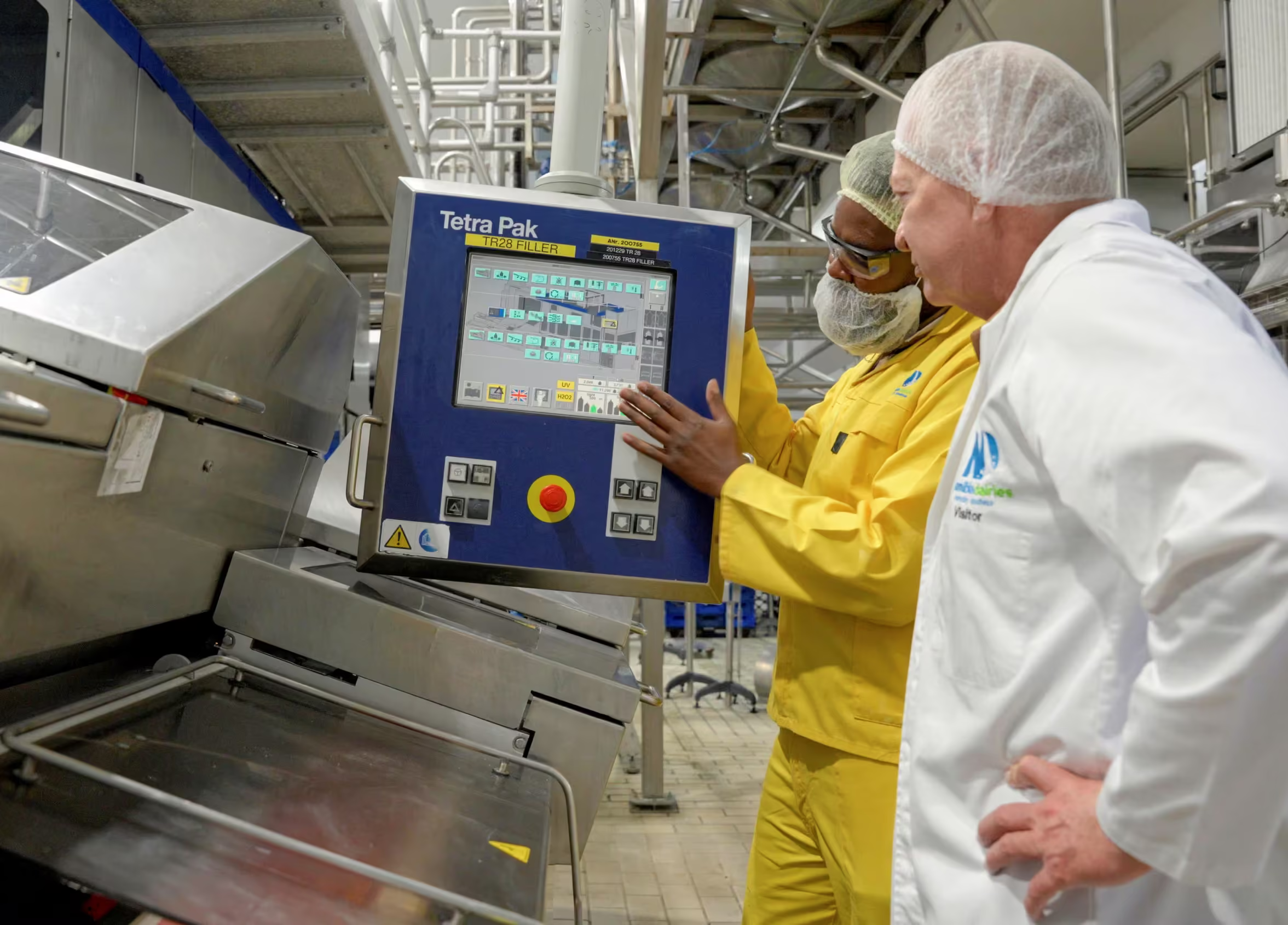
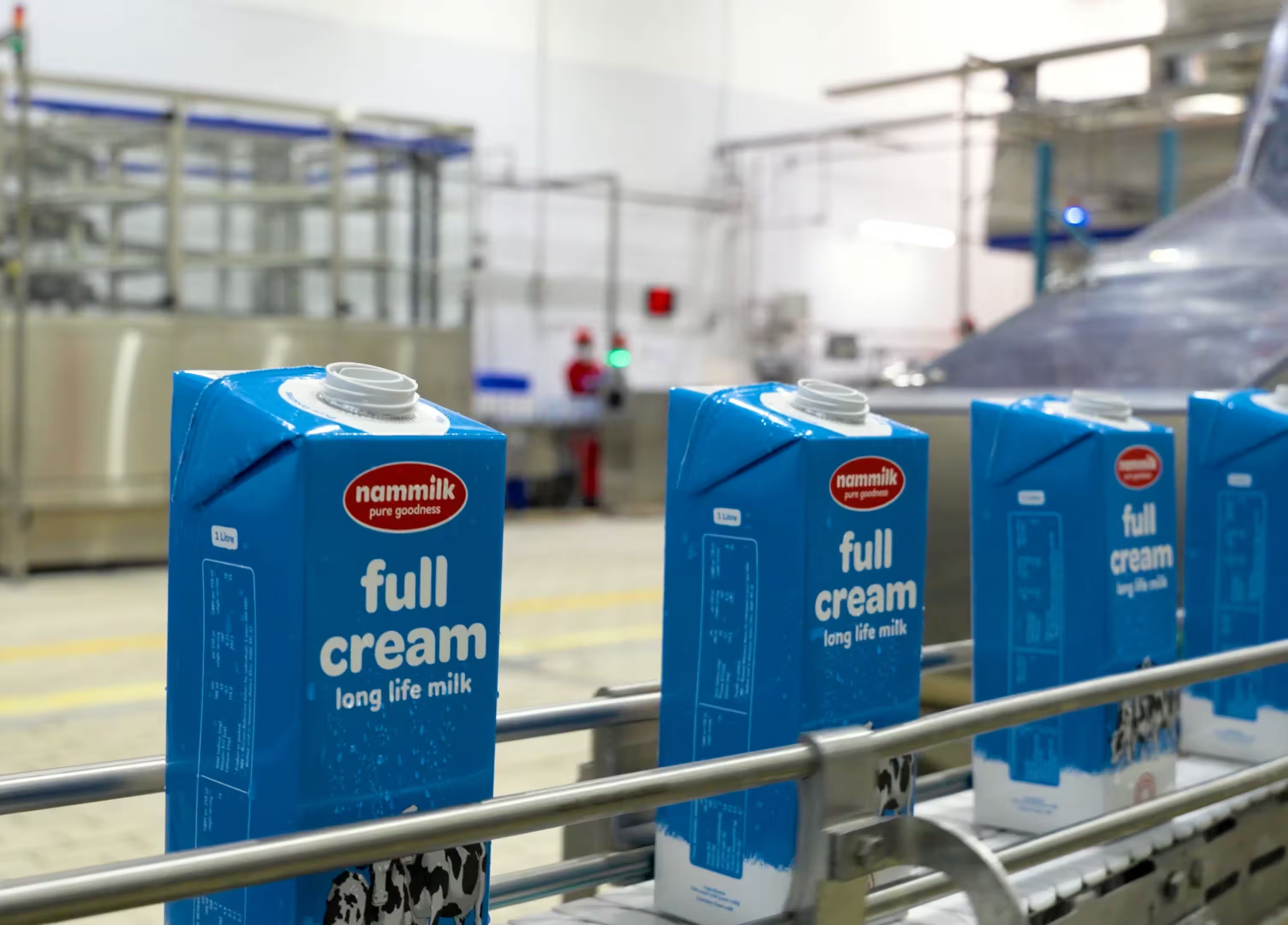

Namibia Dairies has invested around N$54.5 million in a new Tetra Pak A3 Flex filling line, replacing the previous filler that packed the country's only local long life milk for more than 15 years, thus strengthening the business's ability to meet growing demand with world-class manufacturing technology.
This investment forms part of Namibia Dairies' ongoing commitment to modern food production and long term supply security. The installation includes the A3 Flex filler, capable of running at up to 8 000 packs per hour, a new conveyor system, helix accumulator, cardboard packer, advanced cap application technology and supporting packaging and handling equipment.
OL Group Executive Chairman Dr Sven Thieme recently visited the Namibia Dairies production facility to see the new line in operation. "Investments of this scale reflect our confidence in our people, our products and the future of Namibian manufacturing. They demonstrate our commitment to maintaining world-class production standards, supporting local food production and ensuring Namibia Dairies remains a modern, competitive manufacturer for years to come. This is the type of technology you would expect to see in leading dairy operations anywhere in the world and it now runs in Namibia. We are investing today for the next generation of growth."
The filler is the core of the ultra-high temperature (UHT) production process, filling, sealing and packaging long life milk and other ambient products under aseptic conditions. While fresh dairy products typically have a shelf life of six to eight weeks, products packed with a UHT production process remain shelf stable for six to nine months. Together with supporting infrastructure, the new line helps ensure consumers continue to have reliable access to long life dairy products while maintaining the quality and food safety standards they expect.
The replacement forms part of a deliberate upgrade of ageing infrastructure. After more than 15 years of service, the previous filler required increasing maintenance, having had to rely on outdated technology and thus posing growing challenges when sourcing replacement parts and service support. The new line improves reliability, reduces the risk of unplanned downtime and strengthens the foundation for future growth. Packaging waste is to decrease from around 4% to 1.5%, while redesigned packaging configurations and packaging materials sourced from South Africa reduce stockholding requirements and notably improve supply chain efficiency and cost.
Consumers benefit from direct injection-moulded caps with tamper-proof ring-pull seals, replacing the previous glue-applied cap system, effectively pre-empting skewed or missing caps. The investment additionally creates capacity for future innovation, including 500ml UHT formats and potential expansion into ambient juice categories, while providing a more reliable platform to process increasing milk volumes from Namibian and regional producers.

You have found all 3 Easter eggs! Now, fill in your details below and you will automatically be entered into the draw for a chance to win.